Our Blog
Is Your Work-Life Balance at Risk? Imagine this—you start your day checking emails at the breakfast table, take meetings in your pajamas, and suddenly realize it's 8 PM, and you’re still working. Sound familiar? The boundaries between work and life have blurred, leaving professionals burned out, unmotivated, and craving structure. Enter co-working spaces—the modern solution to achieving a seamless work-life balance. These dynamic environments offer the flexibility of remote work with the structure of a professional office. But what makes them the perfect balance? In this blog, we’ll explore the science, psychology, and real-world impact of co-working spaces in helping professionals maintain productivity without sacrificing personal time.
Before diving into why co-working spaces are game-changers, let’s understand how work-life balance has evolved:
Pre-Industrial Revolution: Work and life were inseparable. Artisans and farmers lived where they worked.
Industrial Era: The rise of factories introduced a rigid 9-to-5 schedule, separating work from personal life.
The 2000s Remote Work Boom: The internet enabled work-from-home, blurring boundaries again.
The Rise of Co-Working Spaces: A hybrid solution that combines structure with flexibility, addressing modern burnout.
Working from home often means working all the time. Co-working spaces provide a dedicated workspace, allowing you to mentally "clock in" and "clock out" when needed.
Unlike traditional offices, co-working spaces offer flexible membership plans, letting you:
Work when you're most productive.
Take breaks without guilt.
Avoid the isolation of remote work while maintaining independence.
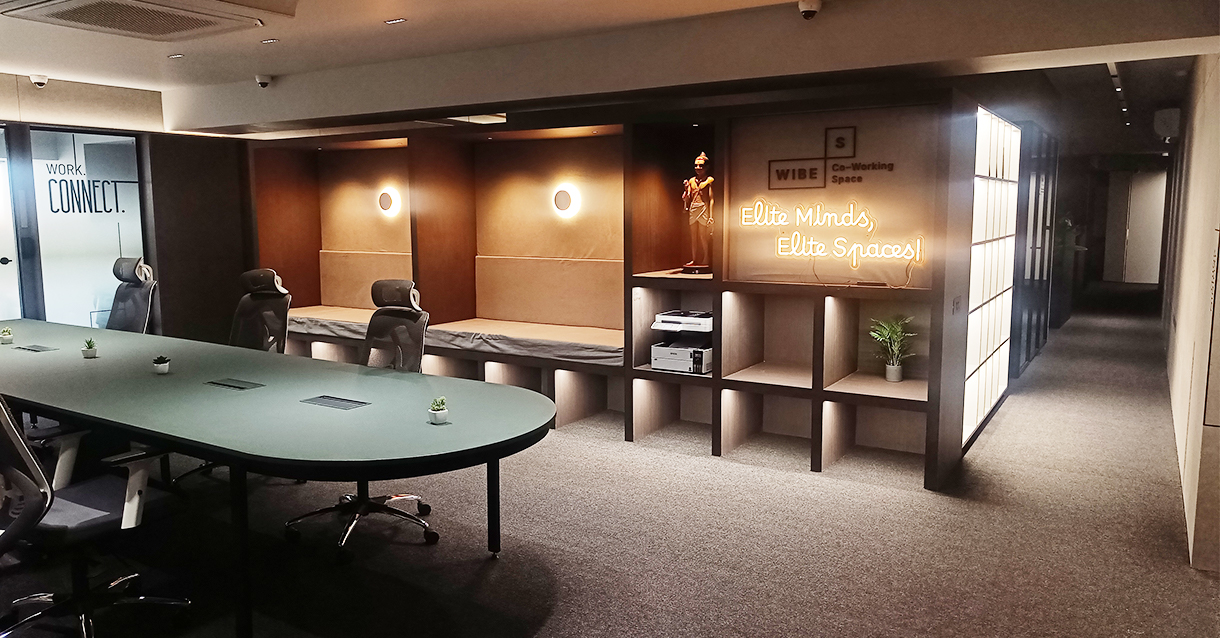
A structured work environment increases productivity while preventing overwork. Co-working spaces integrate:
Quiet zones for deep focus.
Social areas for collaboration.
Wellness programs (yoga, meditation rooms, etc.) to recharge.
Loneliness is a major downside of remote work. Co-working spaces create natural networking opportunities, helping professionals:
Working from home comes with distractions—kids, chores, or slow Wi-Fi. Co-working spaces provide:
High-speed internet.
Private meeting rooms.
Ergonomic workstations.
On-site cafes or lounges for breaks.
Co-working spaces are often strategically located in city centers and residential hubs, cutting down long office commutes. That extra saved time? You can spend it on hobbies, fitness, or with family.
Neha, a freelance content writer, found herself working late nights at home, constantly distracted by household responsibilities. After switching to a co-working space, she regained a sense of routine—starting and ending work at defined hours, improving both her productivity and personal well-being.
A tech startup struggling with remote team collaboration moved into a co-working space. The structured environment, combined with networking opportunities and professional meeting spaces, allowed them to scale efficiently while keeping their team culture strong.
Rahul, a software engineer working remotely for a U.S. company, felt increasingly isolated. Joining a co-working space gave him the best of both worlds—remote flexibility with in-person interactions, boosting his mental health and job satisfaction.
Set Clear Boundaries – Treat your workspace as an office; avoid working from home when unnecessary.
Use Different Zones for Different Tasks – Utilize quiet zones for deep work and social areas for collaboration.
Schedule Breaks & Social Time – Take regular breaks and engage with the co-working community to recharge.
Stick to a Routine – Define clear work hours and leave work at the workspace.
Leverage Perks & Amenities – Use wellness programs, networking events, and skill workshops.
Hybrid Work Domination – More companies are offering co-working memberships as an employee perk.
Wellness-Focused Workspaces – Expect to see more co-working spaces with nap pods, meditation rooms, and fitness areas.
Tech-Driven Efficiency – Smart desks, AI-powered work scheduling, and app-based networking will redefine co-working.
Localized Community Hubs – Neighbourhood-based co-working spaces will reduce commute times while offering professional-grade environments.
Co-working spaces aren’t just about productivity—they’re about living better. They provide structure without rigidity, flexibility without loneliness, and work without burnout. If you’re ready to transform your daily routine, explore the best co-working spaces in your city and experience the perfect work-life balance firsthand.