Our Blog
Learn how co-working spaces help startups, freelancers and small businesses save money on rent, furniture, utilities and office maintenance while enjoying flexible workspace solutions.

Co-working spaces cut office costs mainly by replacing large upfront spending and fixed monthly commitments with one membership fee. Instead of paying separately for rent, a security deposit, furniture, internet, utilities, cleaning and a meeting room, a small business pays for the amount of space it actually uses. The saving is real for many teams, but it is not automatic, and it depends on the plan you choose and how often you use the space.
This article explains where the savings come from, where they can disappear, and how to check the numbers for your own business.
Most owners compare only the monthly rent. A leased office carries more than that:
For a team of two to ten people, the unused space and the upfront cash are often the biggest burden, not the rent itself.
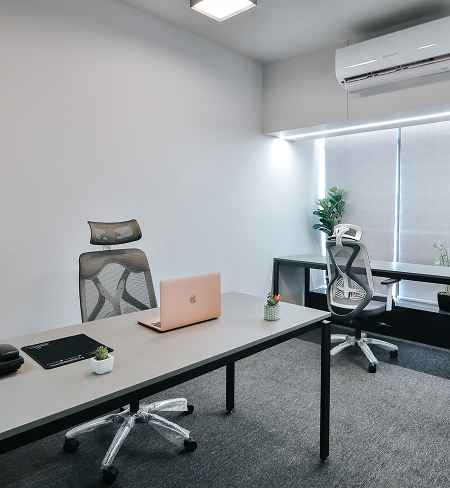
A co-working membership generally removes the need to buy furniture or arrange a fit-out, since desks and seating are already provided. Deposit terms vary by operator, so ask what is payable before you start.
A membership usually bundles several services into a single fee. The exact inclusions differ between spaces, so list what is covered before comparing it with a lease. Common items are internet, power, shared seating and basic common areas.
A lease charges you for the full floor whether the desks are occupied or not. Co-working plans let you match cost to headcount. A freelancer who works from the space a few days a week can choose a lighter plan than a ten-person team that needs fixed desks.
Meeting rooms, a pantry, printing and a reception area are costly to set up for a small team. In a co-working space they are shared, and meeting rooms are often booked only when needed.
If your team grows from three to eight people, or shrinks after a project ends, a flexible plan is easier to change than a lease with a lock-in. Check the notice period and the process for adding or removing desks.
Cost area | Leased office | Co-working space |
|---|---|---|
Upfront cash | Deposit, furniture, fit-out | Membership fee and any deposit the operator charges |
Commitment | Often a fixed lock-in period | Varies by plan; check notice period |
Utilities and internet | Paid and managed by you | Usually included; confirm what is covered |
Meeting rooms | Built or rented separately | Shared; booked as needed |
Unused space | You pay for it | You choose a plan that matches use |
Maintenance and cleaning | Your responsibility | Handled by the operator |
No figures are shown because actual costs depend on the city, location, plan and usage. Compare real quotes for your own case.
Co-working is not cheaper in every case. Look closely at these situations:
Use this simple method before you decide:
Consider a three-person design studio in Surat that works with clients across India. It meets clients only a few times a month and works mostly on laptops. Renting and furnishing an office means committing to space and fixed costs it will not fully use. A co-working plan with a few desks and occasional meeting-room bookings lets the studio pay mainly for what it uses. This is an illustration of the cost logic, not a case study, and the numbers would need to be checked against real quotes.
It tends to suit startups, freelancers and small teams that want lower upfront costs, shared facilities and the freedom to change space as they grow. If your team is large and stable, or you need full privacy, compare it with a private office before deciding.
Is a co-working space cheaper than renting an office?
Often it is for small teams, because you avoid a large deposit, furniture and separate utility bills, and you pay only for the desks you need. It can cost more for a large team that uses fixed desks every day, so compare written quotes for your own headcount.
What costs are usually included in a co-working membership?
This varies by space. Internet, shared seating and common areas are typical inclusions, while meeting-room hours, printing and some extras may be charged separately. Ask for the full list in writing before you join.
Can a startup or freelancer in India use a co-working space for business purposes?
Yes, many startups and freelancers use co-working spaces as a workplace. If you need to use the address for registration or official mail, confirm with the operator first, since policies differ.
How do I know when to move from co-working to a private office?
A common sign is a larger team that needs fixed desks every day, or a need for privacy and branding. Compare the monthly cost per person for both options before you decide.
Discover how co-working spaces help small businesses reduce office costs through flexible memberships, shared facilities, lower upfront expenses and predictable monthly payments.