Our Blog
Introduction: The Future of Work is Here Imagine walking into a sleek office with private desks, conference rooms, and a structured 9-to-5 schedule. Now, contrast that with a flexible workspace—an open, buzzing environment where you choose when and where to work, with no fixed desk. Which one sounds more like the future? As businesses evolve, so does the debate between traditional offices and flexible workspaces. Companies and professionals are reevaluating their work environments for efficiency, cost-effectiveness, and employee satisfaction. Let’s explore the advantages, challenges, and future trends of both models to help you decide which one is right for you.
Traditional Office Era (Pre-2000s): Offices were rigid, with assigned seating, long leases, and hierarchical structures.
The Rise of Remote Work (2000s-2010s): The internet enabled work-from-home culture, but companies still relied on physical offices.
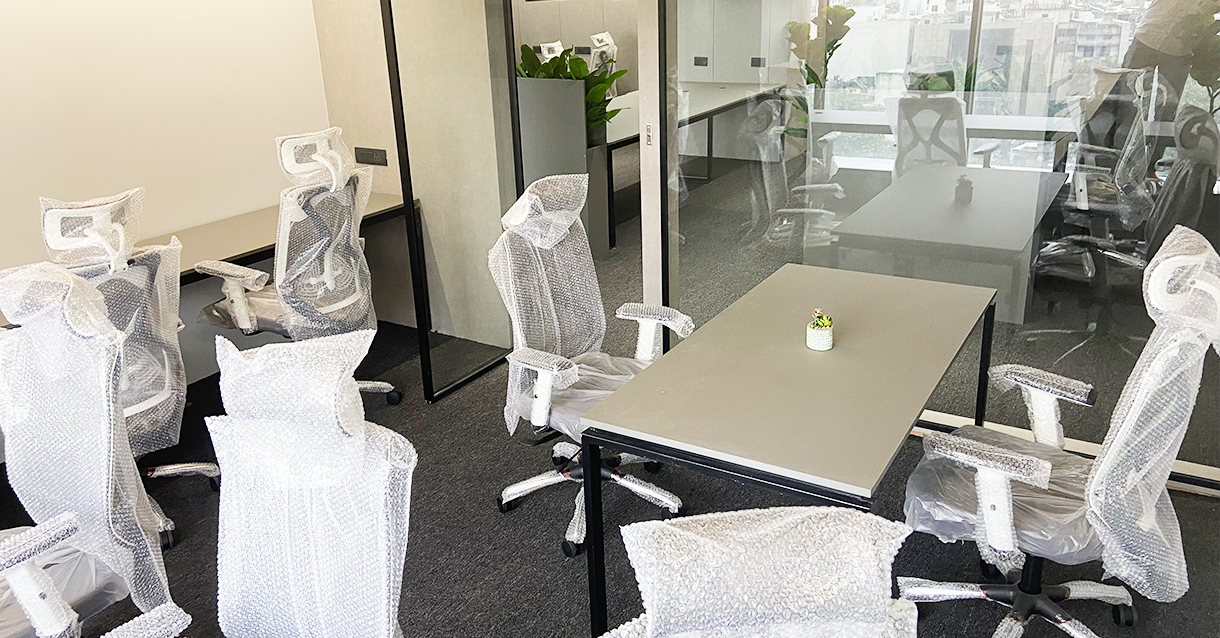
Co-Working & Flexible Workspaces Boom (2010s-Present): Companies like WeWork redefined workspaces, offering businesses and freelancers pay-as-you-go flexibility.
Hybrid & Remote-First Workplaces (Post-Pandemic): Organizations are now embracing a blend of remote work and flexible office setups.
A permanent office gives businesses credibility. It helps build brand identity and fosters a company culture.
Example: Financial institutions and law firms often prefer traditional offices to maintain trust and confidentiality.
Fixed schedules: Employees know when and where to work.
Consistent infrastructure: Dedicated workstations, conference rooms, and reliable IT setups.
Legal security: Long-term leases ensure stability but can be costly.
Face-to-face interaction fosters team collaboration, idea-sharing, and a sense of belonging.
Data Insight: Studies show that in-person work boosts collaboration by 15%, as spontaneous conversations lead to innovative solutions.
High overhead costs – Rent, utilities, and office maintenance add up.
Lack of flexibility – Employees often struggle with rigid schedules.
Commuting stress – Daily travel reduces work-life balance and productivity.
Lower operational costs – No long-term leases, pay for space as needed.
Scalability – Startups and businesses can adjust their workspace as they grow.
Example: Airbnb switched to a flexible workspace model, saving millions in real estate costs post-pandemic.
Autonomy: Employees choose when and where to work.
Diverse work environments: Choose between quiet zones, collaborative areas, or home.
Reduced burnout: Employees feel less micromanaged, increasing job satisfaction.
Flexible spaces bring together freelancers, startups, and enterprises, fostering cross-industry collaboration.
Example: Uber started in a co-working space, benefiting from the shared resources and networking opportunities.
Lack of company culture – Harder to maintain a unified corporate identity.
Distractions & noise – Open environments may not suit deep work.
Security & privacy concerns – Shared spaces may not be ideal for confidential discussions.
|
Feature |
Traditional Office |
Flexible Workspace |
|
Cost |
High (leases, utilities) |
Lower (pay-as-you-go) |
|
Flexibility |
Low (fixed schedule, location) |
High (choose workspace, hours) |
|
Collaboration |
Strong team culture, in-person |
Diverse networking, remote teamwork |
|
Productivity |
Structured environment |
Autonomy enhances efficiency |
|
Company Culture |
Stronger identity & values |
More individual freedom |
|
Scalability |
Difficult & expensive |
Easy expansion or downsizing |
|
Privacy & Security |
High (private offices) |
Lower (shared spaces) |
As businesses embrace flexibility, hybrid models are emerging.
Companies are blending fixed office days with remote or flexible work options.
Example: Google implemented a hybrid work model, allowing employees to work remotely part of the week.
Companies are adopting workspace-on-demand models, where employees book desks or meeting rooms only when needed.
Virtual offices & VR meeting rooms – The metaverse is shaping the future of remote work.
AI-driven workspace optimization – Smart offices adjust lighting, temperature, and desk availability based on employee preferences.
Choose a Traditional Office If: You need a permanent business address and brand presence. Your work requires frequent in-person collaboration. Confidentiality and security are top priorities. Choose a Flexible Workspace If: You want cost-effective, scalable office solutions. You thrive in dynamic environments with networking opportunities. You prioritize work-life balance and remote work options. The future isn’t about choosing one over the other—it’s about integrating both. Businesses that embrace flexibility while maintaining structure will thrive in the modern work landscape.