Our Blog
A flexible workspace offers adaptable office solutions designed for modern work styles.This blog explains the meaning of a flexible workspace, its key benefits, and real-world examples to help you understand if it’s the right fit for your work needs.

Work no longer happens only inside traditional offices.
Remote work, freelancing, hybrid teams, and startups have changed where and how people work.
This shift has led to the rise of flexible workspaces designed to adapt to changing needs rather than force people into rigid setups.
Instead of fixed leases and static layouts, flexible workspaces prioritize:
Adaptability
Convenience
Cost efficiency
User choice
A flexible workspace is an office environment that allows individuals or teams to choose how, when, and where they work, without long-term commitments.
Unlike traditional offices, flexible workspaces offer:
Short-term memberships
Multiple workspace options
Scalable seating
Shared amenities
In simple terms, a flexible workspace adapts to your work style, not the other way around.
Most flexible workspaces share these core features:
No long-term lease requirements
Multiple seating options
Shared infrastructure
Pay-as-you-use or monthly plans
Easy upgrades or downgrades
This flexibility makes them suitable for a wide range of professionals.
Flexible workspaces come in different formats, depending on user needs.
Coworking spaces offer:
Shared common areas
They are ideal for freelancers, remote workers, and startups.
Shared offices provide:
Private cabins
Shared meeting rooms
Professional office environment
Best suited for small teams that need privacy but not long leases.
These offer:
Enclosed offices
Short-term contracts
Scalable seating
Ideal for growing teams or project-based work.
Flexible workspaces remove the burden of office management.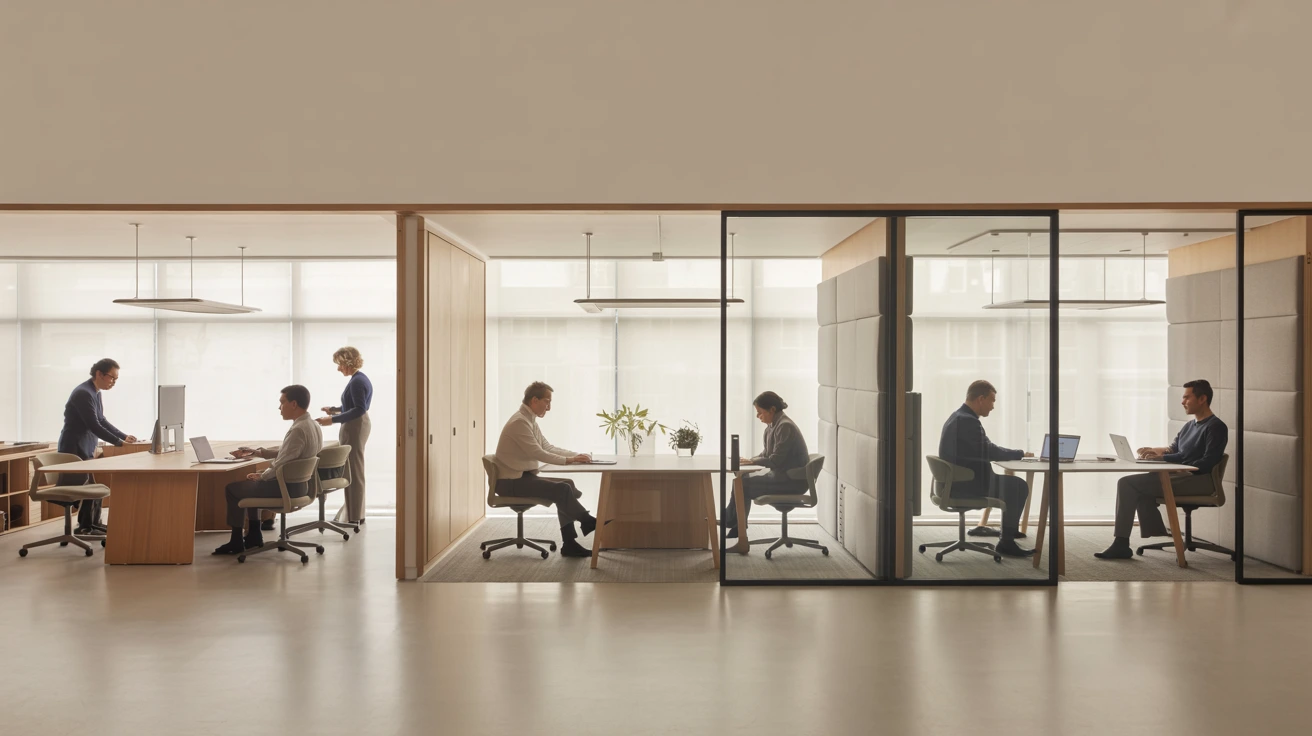
You pay only for what you use.
No upfront setup, furniture, or maintenance costs.
Add or reduce seats easily as your team grows or changes.
Move in and start working immediately, no setup delays.
Choose locations closer to home, reducing commute stress.
Flexible workspaces provide reliable internet, meeting rooms, and business-ready facilities.
Real-World Examples of Flexible Workspaces
A freelance designer uses a coworking space:
3–4 days a week
Hot desk plan
No long-term commitment
A 5-person startup uses:
Dedicated desks
Shared meeting rooms
Flexible expansion options
A remote employee uses a nearby flexible workspace to:
Separate work from home
Access reliable internet
Stay productive
Flexible workspaces are ideal for:
Freelancers
Remote employees
Startups
Consultants
Project-based teams
If your work needs change often, flexibility matters more than ownership.
Flexible workspaces may not suit:
Large teams needing permanent offices
Businesses requiring full customization
Organizations with strict security needs
In such cases, traditional offices may still make sense.
How to Choose the Right Flexible Workspace
When evaluating options, consider:
Location convenience
Desk types available
Pricing structure
Noise levels
Community culture
FAQs
A-1. A flexible workspace is an office setup that allows people to work without long-term leases, offering adaptable seating and short-term plans.
A-2. Coworking is a type of flexible workspace. Flexible workspaces also include shared offices and private flexible offices.
A-3. They can be cost-effective because you avoid setup, maintenance, and long-term lease costs.
A-4. Freelancers, startups, remote employees, and small teams commonly use flexible workspaces.
A-5. Yes. Many flexible workspaces offer dedicated desks and private offices for teams.
A-6. Yes, especially for businesses that value adaptability and scalability over fixed office ownership.
As work becomes more dynamic, flexible workspaces are no longer a trend they’re a long-term solution. They support: Hybrid work Distributed teams Independent professionals Flexibility is becoming a necessity, not a perk.