Our Blog
Choosing the right office space is an important step for every startup. Explore coworking desks, private offices, and traditional leases, along with practical tips to find a workspace that fits your budget, team size, and future growth.

The right office space for a startup is the one that fits your team size, your monthly budget, and how fast you expect to grow over the next 6 to 12 months. For most early-stage teams in India, that means starting with a flexible option, such as a co-working desk or a small private office, and moving to a long lease only when headcount and revenue are steady.
This guide walks through the main options, a six-step selection process, and a scoring checklist you can fill in before you visit any space.
Option | Best for | Main trade-off |
|---|---|---|
Co-working desk | Solo founders and teams of 1 to 3 | Less privacy; shared noise |
Private office in a managed space | Teams of 4 to 15 who need a closed door | Higher monthly cost than a desk |
Traditional leased office | Teams with steady headcount and cash flow | Long lock-in, deposit, and setup work |
Virtual office address | Remote teams that only need a business address | No physical working space |
No option is best for everyone. A two-person software team in Surat has different needs from a six-person sales team that meets clients every week.
Write down how many people will work from the office on a normal day, not how many are on the payroll. If three of your five people work remotely two days a week, you may need fewer desks than you think.
Then add the hires you are confident about for the next 12 months. If the number could double, favour a space where you can add desks or move to a larger room without signing a new contract.
Headline rent is only part of what you pay. Before comparing spaces, ask what the monthly figure includes and what it does not:
Compare spaces on total monthly cost for the same team size. A lower rent that excludes utilities and furniture can cost more than a higher all-inclusive plan.
A convenient location saves time every day and helps with hiring. Check these points on a weekday, at the time your team would actually travel:
If you plan to hire in Surat, a location with easy access from major parts of the city widens your candidate pool.
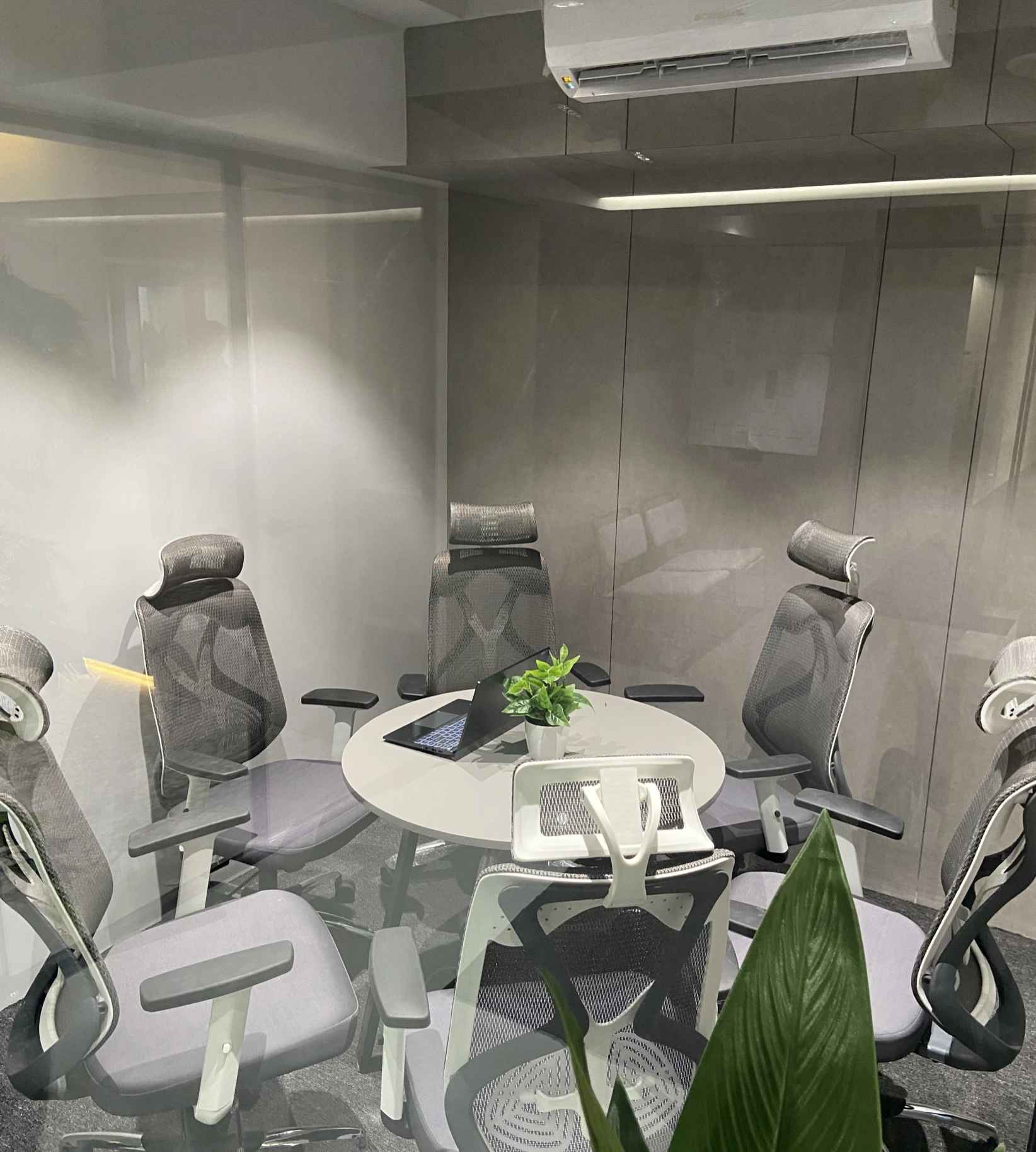
A good-looking space with weak internet will slow your work. Test these facilities during your visit:
Ask to see the space on a busy day. A quiet tour can hide noise problems.
Flexibility is often the main reason startups choose managed workspaces. Ask these questions in writing:
If a term is unclear, ask for it to be added to the agreement. Do not rely on a verbal promise.
How much office space does a startup need?
Plan for the number of people who will be in the office on a typical day, then add a small buffer for growth. Many teams find that desks for in-office staff plus access to a shared meeting room is enough in the first year.
Is co-working or a private office better for a startup?
It depends on privacy needs and team size. A co-working desk suits solo founders and very small teams who want low commitment. A private office suits teams that take frequent calls, host clients, or handle confidential work.
When should a startup move from a flexible space to a long lease?
Consider it when your headcount has been stable for several months, your monthly revenue covers the higher fixed cost comfortably, and you are ready to handle the deposit, fit-out, and lock-in period.
What should I check in an office agreement?
Check the minimum commitment, notice period, deposit and refund terms, what is included in the monthly charge, GST, renewal pricing, and whether you can use the address for business registration. For legal or compliance questions, confirm with a qualified professional.
The right workspace can support your startup's productivity, team collaboration, and long-term growth. Whether you need a coworking desk, a private office, or a flexible managed workspace, choose a space that matches your current needs and future plans. Explore flexible office solutions with Wibes and find a workspace that helps your business move forward.